



Recognizing Hashem In Everything

The Pasuk uses the phrase “כי יפל הנופל”—”if someone who falls will fall from there”—to emphasize that building a guardrail ensures you are not held responsible for any accidents.
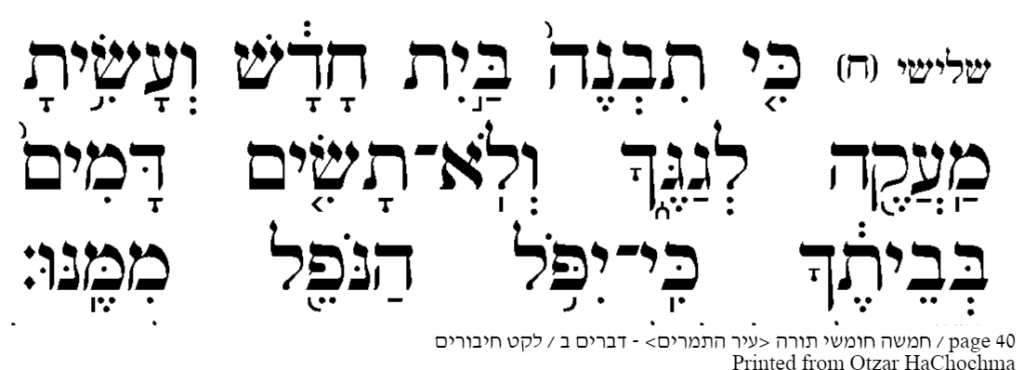
The question – which is already alluded to by Rashi and others – is as follows. Why does the Pasuk describe the utility of the guardrail so as to guard you from liability should someone fall from the roof? Shouldn’t it say that the guardrail will prevent people from falling, and therefore you will not have any culpability?
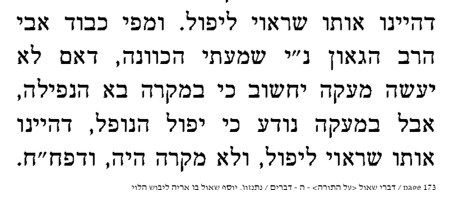
Rav Yosef Shaul Nathanson – the שואל ומשיב answers as follows. If someone is meant to fall off a roof, no guardrail or fence will prevent them from doing so. However, if there is no fence there, people would blame the lack of guardrail for the person falling, ignoring the providence which is in fact behind it. However, once there is a guardrail, and the person falls off regardless (כי יפול הנופל ממנו) then people will have no choice but to recognize that it is not the blame of man, but providence itself that caused it to happen.
I heard Rabbi Hershel Hisiger say this over, and he asked: if we are concerned with people not recognizing providence, why are we not concerned with the inverse scenario? Say someone is up on a roof, and he is about to fall off, but is saved by the fence that is there. Were there no guardrail, and he would have still not fallen off – because that was not meant to be – people would not have thought the fence saved him. Does that not also get in the way of people recognizing the יד השם?
The sad truth is that when something good happens, we have a more difficult time in recognizing the direct hand of השם that caused it. So even if we were to have a case, where there is no rail, and a person is “saved” from falling off the roof, they will more likely than not chalk it up to some other thing, before recognizing the יד השם.
Our job is to recognize Hashem’s hand in everything – whether good or bad – or easy or hard.